
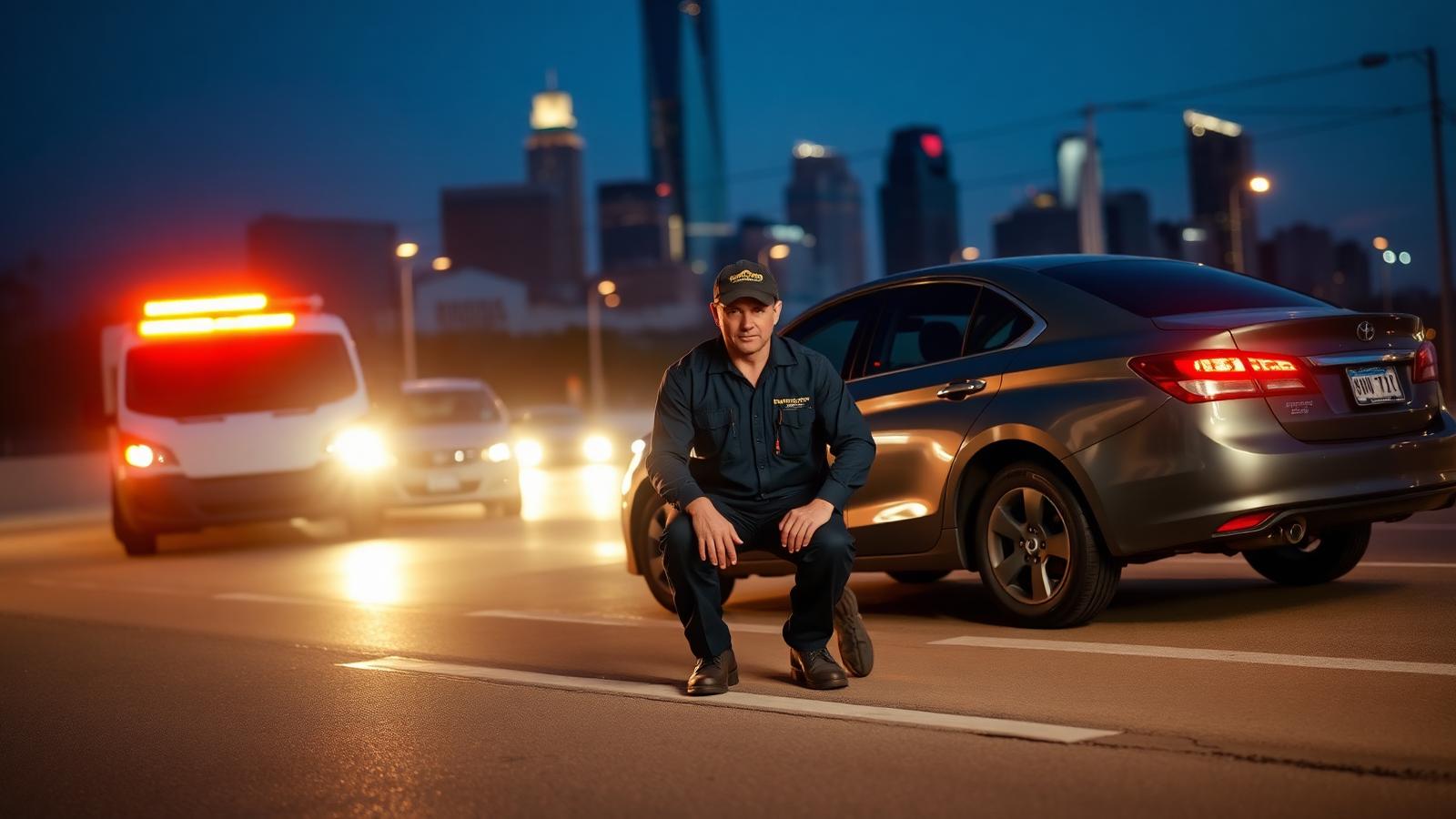
What To Do While You Wait for Roadside Help
Safety guide
The same guidance our dispatchers give on the phone, written down so you can read it before you get out of the car.
Answered live by a local dispatcher, 24 hours a day, 7 days a week.
Quick answer
If your vehicle breaks down in Dallas-Fort Worth, get off the travel lane if it still moves, turn your hazards on, and wait behind the guardrail or belted inside — never between your car and traffic. Call 911 first for injuries, fire, a blocked lane or a child or pet locked inside, then call (469) 606-2575 for the vehicle.
While you wait
What to do while you wait
Read this before you get out of the car. It is the same guidance our dispatchers give on the phone.
- 1Get off the travel lane if the vehicle still movesAim for the right shoulder, an exit ramp or the nearest lot. A car sitting in a live lane on I-35W or LBJ is the single most dangerous place to wait.
- 2Hazards on, wheels turned away from trafficTurn on your hazard lights before you do anything else, and point the front wheels away from the road so a struck vehicle does not roll into traffic.
- 3Get out on the passenger side and stand behind the barrierIf you leave the vehicle, exit away from traffic and wait behind the guardrail or well up the embankment — never between your car and oncoming traffic, and never in front of the vehicle.
- 4Stay buckled inside if there is no safe place to standOn a narrow shoulder or a bridge deck, staying belted inside with hazards on is safer than standing outside. Tell the dispatcher so the technician knows where you are.
- 5Make yourself visible at nightDome light on, phone flashlight facing traffic, reflective triangle or flare well behind the vehicle if you carry one. Most of our overnight calls happen in poor lighting.
- 6Call 911 first for injuries, fire, a blocked lane or a child or pet locked insideEmergency services outrank roadside service in those situations. Call 911, then call us for the vehicle itself.
More detail in our roadside safety guide.
Call 911 first
When roadside assistance is the second call
Some situations outrank a service truck. Dial 911 first in every one of these, then call us for the vehicle itself.
- Anyone is injured, or there has been a collision.
- You smell fuel or see smoke or fire.
- The vehicle is stopped in a live traffic lane.
- A child or pet is locked inside the vehicle.
- You feel unsafe where you are stopped, day or night.
- Downed power lines, flooding or debris are involved.
Straight answer
Do you service my vehicle?
Yes for cars, SUVs, light trucks, EVs, commercial vans and diesel pickups. No for motorcycles and semis — we say so up front instead of sending a truck that cannot help.
Yes, we service these
- Electric vehicles. Teslas, hybrids and EVs — 12-volt battery service, tire work and lockouts, handled with the correct jack points and no tow needed for most calls.
- Commercial vans and fleet trucks. Cargo vans, box trucks and work fleets. Give dispatch the fleet or unit number and we bill the job the same flat way.
- Diesel and heavy-duty pickups. Commercial-grade jump packs and heavy-duty tire tooling ride on the truck, so a three-quarter-ton diesel is a first-trip job.
- Cars, SUVs and light trucks. The everyday roadside call — tires, batteries, jump starts, fuel and lockouts, at whatever lot or shoulder you are sitting in.
No, we do not take these
- Motorcycles. We do not take motorcycle roadside calls. Tell the dispatcher and we will point you to a motorcycle-equipped operator instead of sending a truck that cannot help.
- Semi tractors and heavy equipment. Class 8 trucks, trailers and construction equipment need heavy-duty recovery, which is a different trade and a different truck.
Answers
Frequently asked questions
Is it safer to stay in the car or get out?
On a narrow shoulder, a bridge deck or a busy interstate like I-35W or LBJ, stay belted inside with your hazards on. If you have a wide shoulder with a guardrail or embankment, get out on the passenger side and wait behind the barrier.
What should I do if I break down in a live traffic lane?
Call 911 first. A stalled car in a moving lane is a police matter before it is a roadside matter. Keep your seatbelt on, hazards on, and do not stand outside the vehicle.
How long will I be waiting?
A technician is on site in about 30 minutes on average across DFW, and most jobs are finished within an hour of the call. The dispatcher gives you a real window before you hang up.
My child or pet is locked in the car — what now?
Call 911 immediately. In Texas heat a closed car reaches dangerous temperatures in minutes and emergency responders can force entry right away. Call us afterward if you still need the vehicle serviced.
Is it safe to change a tire myself on the highway?
Not on the traffic side. If the flat is on the driver's side of a highway shoulder, wait for a technician with a lighted service truck rather than kneeling next to moving traffic.
Keep going
Explore more of Salazar Roadside Assistance
Services
Service areas
Broken down right now?
Prices, coverage and response times on this page last fact-checked by Salazar Roadside Assistance dispatch.